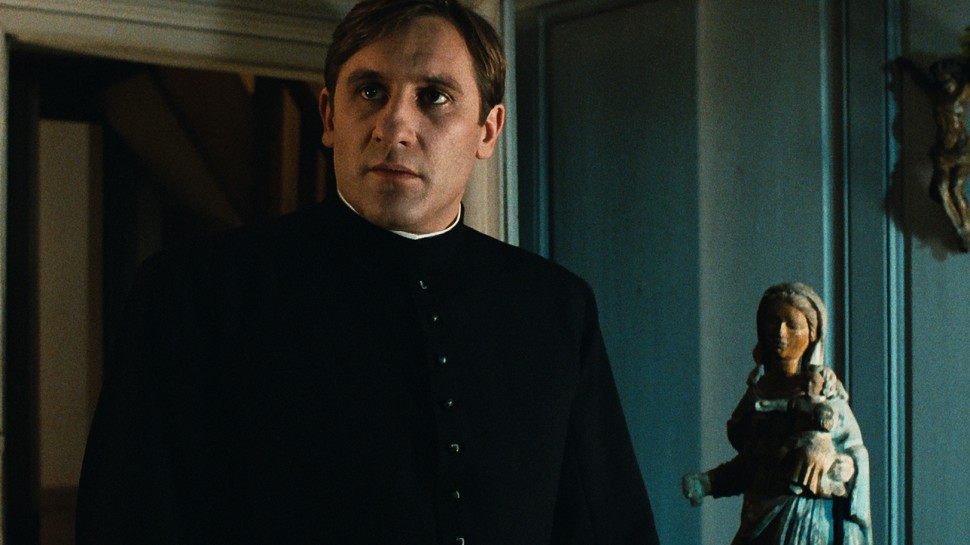
Set in rural France, the film follows the story of a young priest, Father Donissan, who becomes consumed by doubts and desires. As he strives to serve his parishioners with unwavering devotion, he finds himself confronted by the devil in various forms. The narrative unfolds in a captivating manner, drawing the audience into Donissan’s inner turmoil and moral dilemmas.

One of the standout aspects of “Under the Sun of Satan” is its atmospheric cinematography. The lush French countryside serves as a backdrop for the characters’ inner struggles, adding depth and texture to the storytelling. The film’s visual style enhances the mood and themes, creating a rich viewing experience for the audience.
The performances in the movie are equally impressive, with actors Gérard Depardieu and Sandrine Bonnaire delivering powerful and nuanced portrayals. Depardieu captures the conflict within Father Donissan with remarkable intensity, while Bonnaire shines as the enigmatic Mouchette, a young woman who becomes entangled in his life.
Through its exploration of faith and morality, “Under the Sun of Satan” prompts viewers to reflect on their own beliefs and values. The film presents a complex and multi-layered narrative that invites interpretation and discussion, making it a compelling watch for those interested in philosophical cinema.
In conclusion, “Under the Sun of Satan” stands out as a profound and thought-provoking film that lingers in the mind long after the credits roll. With its engaging story, strong performances, and striking visuals, it is a cinematic experience that is sure to captivate audiences seeking a deeper exploration of life’s eternal questions.
