Eichmann (2007) is a British-Hungarian historical drama directed by Robert Young, starring Thomas Kretschmann as Adolf Eichmann and Troy Garity as Captain Avner Less. The film explores one of the most chilling figures of the Holocaust through a psychological lens, depicting the intense and unsettling interrogation of the Nazi officer after his capture by Israeli agents.

The story is set in 1961, inside a guarded Israeli prison in Jerusalem. Adolf Eichmann, one of the chief architects of the Holocaust, has been captured by Mossad in Argentina and brought to Israel to stand trial for crimes against humanity. Before the trial begins, Israeli police officer Avner Less is assigned to interrogate him — to extract a full confession detailing Eichmann’s role in organizing the deportation and extermination of millions of Jews during World War II.
What follows is a battle of intellect, morality, and manipulation. Eichmann, portrayed with eerie restraint by Thomas Kretschmann, presents himself not as a monster but as a bureaucrat — a man who claims he was “just following orders.” Through a series of tense interrogations, Less attempts to pierce Eichmann’s cold rationalizations and uncover the human truth behind his mechanical cruelty. The conversations become psychological duels, revealing the terrifying normality of evil: how atrocity can be committed not out of passion, but obedience.
Flashbacks transport the viewer to Eichmann’s past — the war years in Nazi Germany, his interactions with SS leaders like Himmler, and his chillingly methodical management of deportations from Hungary, Austria, and Poland. These scenes contrast starkly with the sterile interrogation room, showing how a man of routine and order facilitated unspeakable crimes with bureaucratic precision.
The film’s emotional center lies in the interplay between interrogator and prisoner. Captain Less, a man of moral conviction and personal loss (his father perished in the Holocaust), struggles to maintain professionalism as Eichmann’s evasions and self-justifications wear him down. Their exchanges raise unsettling questions: Can evil be ordinary? Can a man commit atrocities without hatred, purely through obedience and ambition?
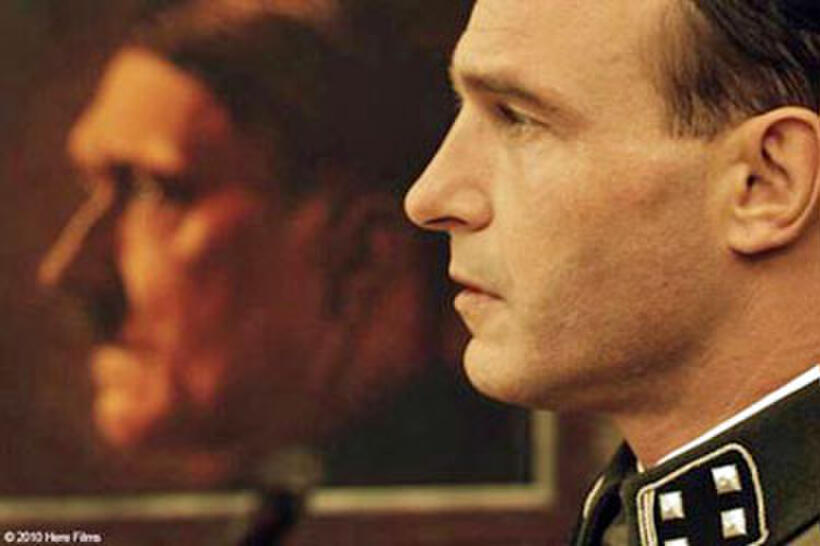
Director Robert Young keeps the tone tense and claustrophobic. Much of the film takes place in confined spaces — stark rooms, narrow hallways — emphasizing the psychological suffocation of both men. The cinematography uses muted colors and sharp contrasts, creating an atmosphere of moral coldness, mirroring Eichmann’s detached demeanor.
Thomas Kretschmann’s performance is chillingly controlled. He embodies Eichmann not as a raving ideologue, but as an efficient administrator, a man who compartmentalized horror behind paperwork. This portrayal aligns with Hannah Arendt’s famous concept of “the banality of evil” — that the greatest crimes in history may be committed by ordinary, even polite individuals who refuse to think critically about their actions.
Troy Garity, as Avner Less, provides a strong moral counterweight. His portrayal captures the tension of a man seeking justice through understanding — trying to comprehend the incomprehensible. The dynamic between the two men drives the film: Less’s empathy and Eichmann’s cold logic become mirror images of humanity and inhumanity.
