To Rome with Love is a 2012 romantic comedy written and directed by Woody Allen, serving as both a love letter to the Eternal City and a wry exploration of human folly, fantasy, and fame. Set against the sun-drenched streets and timeless beauty of Rome, the film weaves together four separate stories, each distinct in tone yet connected by a shared theme — the unpredictability of love and the absurdities that define modern life.

The first story follows Hayley, an American tourist who falls in love with a young Italian man, Michelangelo, while studying abroad. When her parents (played by Woody Allen and Judy Davis) travel to Rome to meet his family, Allen’s character, a retired opera director, discovers that Michelangelo’s father — a mortician — has an extraordinary singing voice. However, the man can only sing beautifully in the shower. In true Allen fashion, the story spirals into a surreal farce as the would-be impresario tries to stage a full opera performance with the man singing from inside a working shower on stage.
The second story centers on Leopoldo Pisanello (played by Roberto Benigni), an ordinary Roman office worker who inexplicably becomes famous overnight. Paparazzi follow him everywhere; women suddenly desire him; his every move becomes headline news. Yet as quickly as his fame arrives, it vanishes — leaving him disoriented and hollow. His story satirizes the superficiality of celebrity culture and the human craving for recognition, no matter how meaningless it may be.
In another thread, Jack (Jesse Eisenberg), a young American living in Rome, finds his relationship tested when his girlfriend invites her seductive and free-spirited friend Monica (Ellen Page) to stay with them. The situation becomes even more complicated when Jack’s idol, an older architect named John (Alec Baldwin), begins appearing to him as a sort of ghostly mentor or conscience — observing his romantic entanglements and warning him of mistakes that echo his own past. This story is a bittersweet reflection on memory, temptation, and the cyclical nature of desire.
The final storyline follows Antonio and Milly, a newlywed couple from a provincial Italian town who come to Rome seeking opportunity. Through a series of comic misunderstandings, Antonio ends up mistaken for a client of a glamorous prostitute (played by Penélope Cruz), while Milly becomes swept up in a fantasy of her own after meeting a famous film actor. Both are tested by lust, confusion, and the absurdity of their romantic ideals.
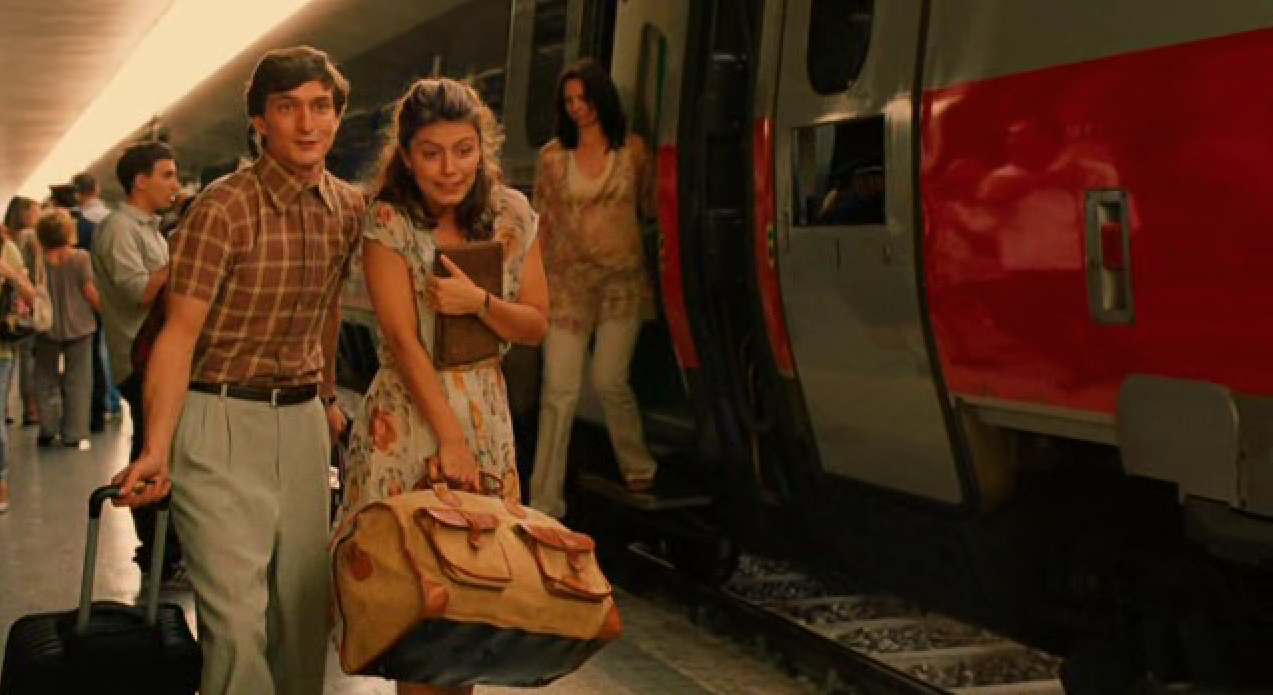
Each vignette unfolds with the rhythm of a fable, blending realism and whimsy. Rome itself — golden, chaotic, romantic, and alive — serves as the unifying character. Its beauty amplifies both the charm and the foolishness of the people wandering through it. Allen’s direction captures the city as a stage for dreams and delusions, where every alleyway hides a story about love, longing, or self-deception.
Stylistically, To Rome with Love evokes the playful structure of Italian comedies from the 1960s — particularly those of Fellini. It balances visual warmth with ironic distance, finding humor in insecurity, infidelity, and ambition. The film’s tone ranges from gentle romance to absurd farce, maintaining a rhythm of light philosophical comedy that is distinctly Allen’s.
The ensemble cast — including Woody Allen, Alec Baldwin, Roberto Benigni, Penélope Cruz, Ellen Page, and Jesse Eisenberg — brings charm and balance to the intertwining narratives. Each character, in their own way, seeks meaning in love or success, only to find that both are fleeting and often ridiculous.
Ultimately, To Rome with Love is not a single story but a mosaic — a meditation on desire, identity, and the strange illusions that govern modern existence. Beneath the humor lies a melancholy understanding: that people often chase happiness through fantasy, while life, in its beautiful imperfection, passes quietly around them.
