The Leftovers is an American supernatural drama television series created by Damon Lindelof and Tom Perrotta, based on Perrotta’s 2011 novel of the same name. Airing on HBO from 2014 to 2017, it is a profound and haunting exploration of loss, belief, and the search for meaning in the face of the inexplicable.

The story begins three years after a mysterious event known as the Sudden Departure, during which 2% of the world’s population — approximately 140 million people — vanish without warning or explanation. The series does not focus on where they went, but on those who were left behind: the grieving, the angry, the lost, and the believers struggling to move forward in a world that no longer makes sense.
At the center of the narrative is Kevin Garvey (played by Justin Theroux), the police chief of the small town of Mapleton, New York. Kevin is a man unraveling — trying to hold together his family and his own sanity as the town becomes increasingly fractured. His ex-wife, Laurie (Amy Brenneman), has joined a mysterious cult known as The Guilty Remnant, whose members dress in white, take vows of silence, and chain-smoke as a protest against forgetting. His daughter Jill (Margaret Qualley) drifts between rebellion and despair, while his son Tom follows a self-proclaimed prophet offering salvation.
As the series progresses, the story expands beyond Mapleton, exploring other communities and belief systems that have emerged in the aftermath of the Departure. Every character grapples with the same question: how do you find meaning in a world where the rules have broken? Some turn to faith, others to denial or madness; some embrace love, while others surrender to despair.
The show’s power lies in its tone — intimate yet cosmic, tragic yet darkly funny. It weaves moments of surrealism and spirituality into everyday life, blending the emotional realism of grief with the metaphysical strangeness of an unknowable universe. The result is both deeply human and mythic in scope.
The Leftovers is not a story of answers, but of acceptance. Its mystery is never fully explained, because its true subject is the experience of not knowing — the pain of uncertainty, the stubborn persistence of hope, and the small, miraculous ways people keep living.
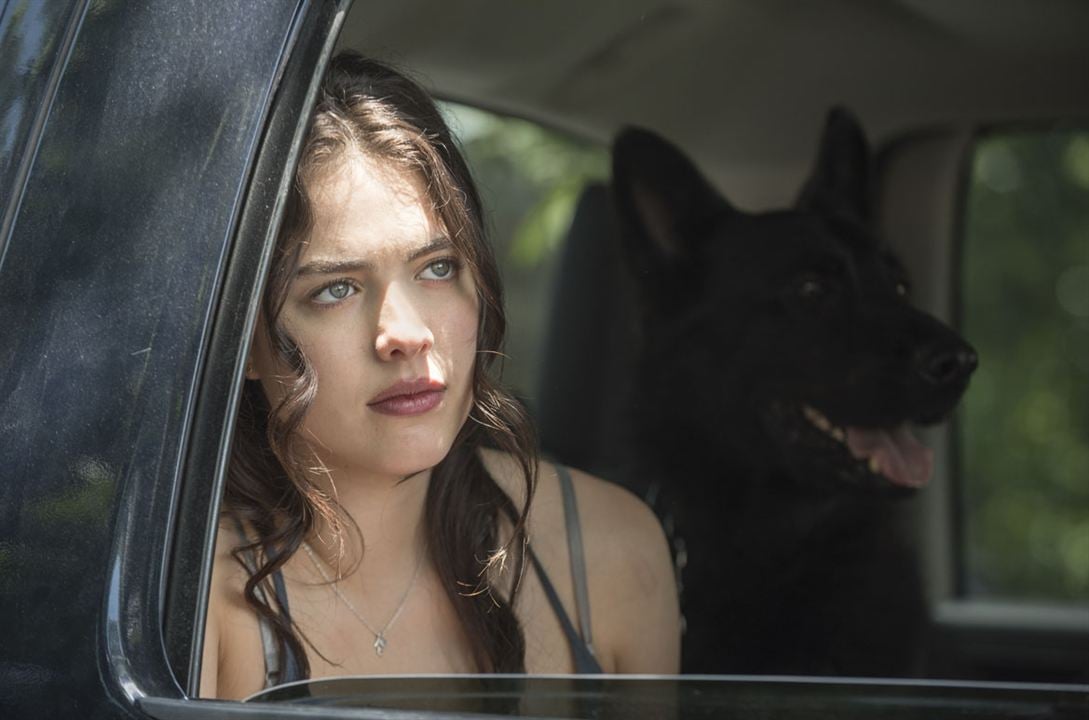
Visually and emotionally, the series is marked by stillness, silence, and the weight of longing. Composer Max Richter’s haunting score deepens the atmosphere, underscoring moments of sorrow and transcendence. The direction often lingers on faces and gestures, allowing emotion to unfold in quiet waves rather than grand statements.
Across its three seasons, The Leftovers evolves from a story about loss into a meditation on faith, love, and the limits of understanding. The final season, set partly in Australia, reaches a tone of near-biblical grace — both mysterious and redemptive — culminating in one of television’s most powerful conclusions.
In essence, The Leftovers is a series about what it means to live after the unthinkable. It’s about grief as a universal condition, belief as both salvation and madness, and love as the only truth that remains when everything else is gone. Profound, mysterious, and emotionally devastating, it stands as one of the most ambitious and moving dramas of the 21st century.
