Stigmata (1999) is a supernatural horror-thriller directed by Rupert Wainwright, starring Patricia Arquette, Gabriel Byrne, and Jonathan Pryce. Blending religious mystery with psychological terror, the film explores the tension between spirituality and institutional power — asking what happens when divine experience collides with the rigid structures of the Church.
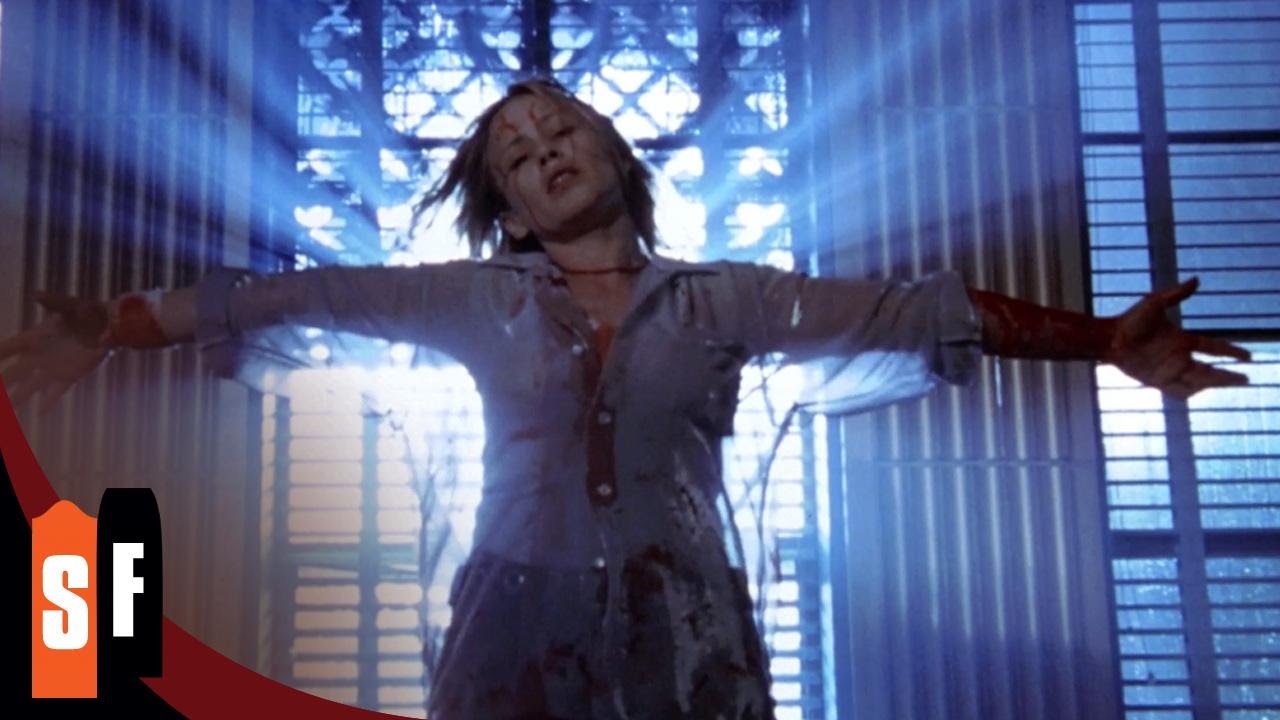
The story follows Frankie Paige (Patricia Arquette), a young, free-spirited hairdresser living in Pittsburgh. Frankie is a skeptic, someone with little interest in religion or faith. Her life takes a horrifying turn when she begins to experience the stigmata — spontaneous wounds mirroring the crucifixion injuries of Jesus Christ. The phenomena begin after she receives a rosary stolen from a deceased Italian priest, linking her fate to something far greater and more dangerous than she could imagine.
As Frankie’s suffering intensifies, the Vatican sends Father Andrew Kiernan (Gabriel Byrne), a former scientist turned priest, to investigate. He is an expert in debunking religious miracles, but what he discovers in Frankie defies explanation. Her body bears the unmistakable marks of divine suffering, yet her personality and lifestyle make her an unlikely vessel for holiness.
The deeper Father Kiernan investigates, the more he uncovers a sinister secret within the Church — a struggle over a hidden gospel that could undermine centuries of doctrine. This “lost message” of Christ, if revealed, would shift the foundation of organized religion, emphasizing personal connection to the divine over institutional control. Frankie, caught between faith and possession, becomes both victim and messenger, her agony symbolizing the Church’s fear of truth it cannot control.

Patricia Arquette delivers a raw, physical performance as Frankie, embodying the terror and transcendence of a woman overtaken by forces beyond comprehension. Her portrayal moves between fragility and fury, innocence and revelation, creating a haunting image of reluctant sanctity. Gabriel Byrne, in contrast, brings quiet depth to Father Kiernan — a man torn between duty and faith, science and belief. Together, they form a relationship defined by compassion and spiritual tension, as each tries to understand whether Frankie’s torment is divine, demonic, or something in between.
Visually, Stigmata is striking and atmospheric. The cinematography is drenched in religious symbolism — flickering candles, crucifixes, water, and blood — set against the backdrop of modern urban decay. The editing is frenetic and surreal, often mirroring Frankie’s chaotic visions, while the soundtrack by Billy Corgan and Massive Attack gives the film a dark, pulsating energy that bridges the sacred and the profane.
Thematically, the film explores faith, doubt, and the corruption of religious authority. It portrays spirituality as something deeply personal — an experience that cannot be owned or mediated by the Church. The stigmata, in this context, becomes both a blessing and a rebellion
