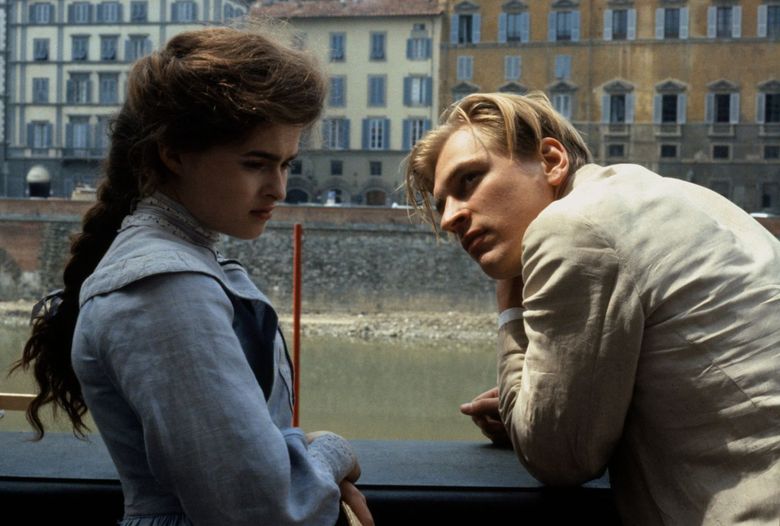
The movie begins with Lucy on a trip to Florence, where she meets the unconventional George Emerson. Their chance encounter sparks a deep connection between them, challenging Lucy to confront her feelings and question the rigid conventions that govern her life. As their romance blossoms, Lucy is torn between following her heart and conforming to the rigid expectations of her social class.

Against the backdrop of stunning Italian landscapes and sumptuous period settings, “A Room with a View” masterfully weaves a tale of love, longing, and self-discovery. The film delicately explores themes of identity, class distinctions, and the conflict between societal norms and personal freedom. Through exquisite cinematography and nuanced performances, the audience is drawn into Lucy’s inner turmoil and her quest for autonomy in a world that seeks to dictate her choices.
Helmed by director James Ivory and based on the novel by E.M. Forster, “A Room with a View” boasts a stellar cast that brings the characters to life with depth and emotional resonance. Helena Bonham Carter shines in the role of Lucy, embodying her journey from innocence to self-realization with grace and poignancy. Julian Sands delivers a captivating performance as the enigmatic George, whose free-spirited nature challenges Lucy to break free from the constraints of her sheltered existence.
As the story unfolds, “A Room with a View” invites viewers to ponder the timeless themes of love, freedom, and individuality. The film’s rich tapestry of emotions and philosophical musings resonates with audiences of all generations, reminding us of the universal pursuit of happiness and self-discovery.
In conclusion, “A Room with a View” stands as a cinematic masterpiece that continues to enchant and inspire viewers with its timeless tale of love and liberation. With its lush visuals, compelling performances, and resonant themes, this beloved classic endures as a testament to the enduring power of storytelling and the human spirit.
